The Art of Doing Hard Things: 7 Powerful Lessons
To do hard things, choose small challenges on purpose, decide in advance when you will do them, start before you feel ready, and focus on the next step instead of the whole task. Chosen hardship builds the confidence and resilience you need for the hard things life throws at you.
Nobody has to sign up for hard. Life delivers plenty of it without your consent. Job loss, grief, failure, illness. The hard stuff comes whether you’re ready or not.
So why would anyone choose more of it?
Because there’s a fundamental difference between hard things that happen to you and hard things you choose. One leaves you reactive, anxious, and wondering how much more you can take. The other builds something in you that no comfortable life ever could: the quiet certainty that you can handle what comes.
Doing hard things on purpose is not masochism. It’s training. And the people who understand this live differently from everyone else.
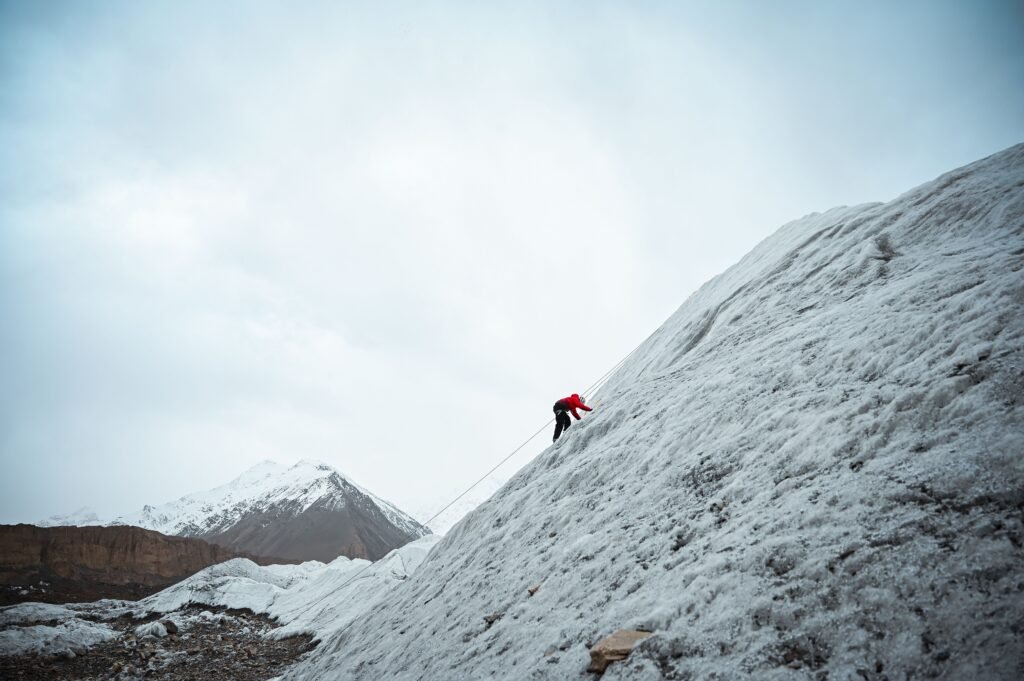
You already deal with hard things you didn’t choose.
This post is about what changes when you start choosing some of them on purpose.
In this guide
- What Comfort Is Actually Costing You
- The Difference Between Chosen and Unchosen Hardship
- What Deliberately Hard Things Actually Build
- Practical Ways to Do Hard Things on Purpose
- The Protocol for Choosing Your Hard
- On the Other Side of Hard
- How to Do Hard Things When You Do Not Want To
- Why Doing Hard Things Makes Life Easier
- Frequently Asked Questions
What Comfort Is Actually Costing You
Modern life is engineered for ease. Food arrives in minutes, entertainment is on demand and plenty of us work from the couch. The friction that used to be part of daily existence has been systematically removed.
This is mostly good. But it has a side effect nobody talks about.
When life gets too easy, your tolerance for difficulty shrinks. It happens slowly, the way a muscle weakens when you stop using it. You don’t notice until you need it and it’s not there.
Psychologist Mihaly Csikszentmihalyi at Claremont Graduate University spent decades studying human happiness and optimal experience. His research, documented in Flow: The Psychology of Optimal Experience (1990), found consistently that people report their highest states of engagement and satisfaction not during leisure, but during challenging activities that stretched their skills to their limits. Comfort, in other words, wasn’t where people found the most satisfaction.
The cost of a too-comfortable life isn’t just weakness. It’s the creeping feeling that you’re not doing anything with what you have. That feeling is hard to name but easy to recognize. It sits underneath the scrolling, the restlessness, the vague dissatisfaction with a life that looks fine on paper.
The Difference Between Chosen and Unchosen Hardship
Viktor Frankl, psychiatrist and Holocaust survivor, wrote in Man’s Search for Meaning (1946) that the last human freedom is the ability to choose one’s attitude toward any given set of circumstances. Suffering without meaning destroys people. Suffering chosen for a purpose builds them.
This distinction matters more than people realize.
When difficulty arrives uninvited, your nervous system registers threat. Stress hormones rise, your attention narrows and you’re focused on getting through it.
When you choose difficulty, something different happens. You’re in control, and that matters. Decades of research on controllable versus uncontrollable stress, starting with Steven Maier and Martin Seligman’s work in the 1960s and 70s, suggest that stress you have some control over does far less damage than stress you can’t control.
The cold shower you chose is not the same as the burst pipe you didn’t. Both are cold. Only one makes you stronger.
What Deliberately Hard Things Actually Build
The benefits of voluntary hardship are not abstract. They’re specific, measurable, and well-documented.
Confidence. Real confidence isn’t built from compliments or affirmations. It’s built from evidence. Every time you do something hard, you add to a growing body of proof that you’re capable. Over months and years that proof gets hard to argue with, because it’s based on things you’ve actually done.
Distress tolerance. Researchers at Harvard Medical School studying post-traumatic growth found that people who had faced significant challenges and recovered showed greater resilience to future stressors than those who had led primarily sheltered lives. Hardship, survived and processed, is literally inoculation against future hardship.
Clarity. When you’re in the middle of something genuinely difficult, the unimportant stuff tends to fall away. Plenty of people who take on voluntary challenges, like distance running or a difficult creative project, say it helps them see their priorities more clearly.
Identity. “I’m someone who does hard things” is one of the most useful identities you can hold. It carries over into work, relationships and health. Once you know you can push through discomfort in one area, the evidence transfers. The person who finishes a marathon shows up differently to a difficult conversation at work.
Practical Ways to Do Hard Things on Purpose
You don’t need to run ultramarathons or take ice baths at 4am. The specifics matter less than the principle: regularly put yourself in situations where completion is not guaranteed and comfort is not available.
Physical challenge. The body is the most direct path to mental resilience. Lift heavier than you think you can. Run farther than you planned. Do the last two reps when your body says stop. Physical hardship is immediate, honest feedback. You either did it or you didn’t.
Creative discomfort. Make something that might be bad. Share work you’re uncertain about. Start a project with no guarantee of success. Putting unfinished work in front of people is uncomfortable, and it’s also where a lot of meaningful work happens.
Social difficulty. Have the conversation you’ve been avoiding. Apply for the thing you think you’re not ready for. Say what you actually think in a room where it might not land well. Social courage gets easier with practice and harder when you avoid it.
Discipline challenges. Wake up an hour earlier for 30 days. Do something you hate doing but know you should, every day for a month. The specifics don’t matter much. What matters is that you set a standard and hold it even when you don’t feel like it.
The Protocol for Choosing Your Hard
Not all hard is equal. Randomly piling difficulty on your life is not the point. The goal is deliberate challenge that targets the specific areas where you need to grow.
Ask yourself three questions:
First, where am I currently avoiding something I know I should face? That avoidance is the location of your growth. The answer to this question almost always points directly at the hard thing worth choosing.
Second, what would I attempt if I knew I could handle failure? We often don’t go after what we want because the difficulty looks too big. Choosing voluntary hardship in smaller doses builds the tolerance to go after larger things.
Third, what would the person I want to become do today that I’m currently not doing? Identity questions are clarifying. The gap between your answer and your current behavior is the exact location of the work.
On the Other Side of Hard
There’s something that happens after you do something genuinely difficult. Sometimes it’s days later: a quiet sense of being a bit more solid than before.
It’s not dramatic, but it’s real, and it’s why people who’ve felt it tend to go back for more.
They don’t enjoy suffering. They know what it gives them, and they’ve noticed that a life built entirely around comfort leaves a nagging sense of never having really tested themselves.
You don’t have to wonder. The answer is available. It’s on the other side of the thing you’ve been avoiding.
Go do that thing.
Want to build the daily systems that make hard things easier? Download the free 7-Day Discipline Reset Guide and start building the habits that create resilience.
Go deeper: Read the complete guide on how to build habits that stick, and learn how to stay disciplined when the excitement wears off.
How to Do Hard Things When You Do Not Want To
- Shrink the first step. Commit to five minutes. Starting is the hardest part.
- Decide in advance. Schedule the hard thing at a fixed time so you are not negotiating with yourself.
- Remove the escape routes. Phone in another room, tabs closed, gear ready.
- Name the discomfort. “This is uncomfortable, and I can do it anyway.”
- Reward the effort. Track it and give yourself credit for showing up, not just for results.
Why Doing Hard Things Makes Life Easier
Every hard thing you choose is evidence that you can handle discomfort. That evidence builds self-trust, and self-trust makes the next hard thing feel smaller. It is the core idea behind why self-discipline is the highest form of self-respect.
To make hard things a habit, start with how to build discipline without motivation and learn how to stay disciplined after the first burst of energy fades.
Frequently Asked Questions
Why is doing hard things good for you?
Voluntary challenge builds stress resilience, confidence, and distress tolerance. Research consistently shows that people who regularly face and overcome difficulty report higher life satisfaction and greater mental resilience than those who primarily seek comfort. The reason is straightforward: each completed challenge adds evidence that you’re capable, and that evidence compounds over time into genuine self-trust.
How do I start doing harder things without burning out?
Start with one deliberately challenging thing per week. The goal is progressive difficulty, not immediate extremity. Choose something that genuinely stretches you but doesn’t break you. As you complete challenges, your tolerance builds and you can take on more. The principle is the same as physical training: progressive overload applied consistently over time.
What counts as a hard thing worth doing on purpose?
Anything that creates genuine discomfort and requires you to push past your initial resistance. This could be physical (a harder workout), creative (sharing work publicly), social (having a difficult conversation), or behavioral (waking up earlier, finishing what you start). The specific domain matters less than the principle: you’re choosing discomfort rather than avoiding it.
Is there such a thing as too much voluntary hardship?
Yes. Chronic stress without adequate recovery is destructive regardless of whether it’s chosen or not. The goal is challenge with recovery, not relentless grinding. Rest is part of the cycle. Serious athletes follow their hardest training blocks with recovery periods, and the same idea applies to everyone.