100+ Habits to Track: Daily, Weekly and Monthly Habit Tracker Ideas
The best habits to track are small, specific actions you can check off in seconds, like “drank 8 glasses of water,” “walked 20 minutes,” or “read 10 pages.” Start with 3 to 5 daily habits, not 30, and add a couple of weekly and monthly ones. Below are 115 habits to track, sorted into daily, weekly and monthly lists, plus how to choose yours and keep your tracker going.
A habit tracker works because it turns invisible effort into visible proof. A large review of 138 studies found that monitoring progress improves the chances of reaching a goal, and the effect is stronger when progress is physically recorded (Harkin et al., 2016). A row of checkmarks is that record.
Want to track these for free? Use our free online habit tracker (no sign-up needed) or download the free printable monthly and weekly tracker PDF.
In this guide
- How to Choose Which Habits to Track
- Daily vs Weekly vs Monthly Habits: Which Goes Where?
- Daily Habits to Track for Health
- Habits to Track for Mental Health and Mindset
- Productivity Habits to Track
- Morning Routine Habits to Track
- Evening Routine Habits to Track
- Money Habits to Track
- Home and Life Admin Habits to Track
- Weekly Habits to Track
- Monthly Habits to Track for Adults
- A Simple Starter Tracker (Copy This)
- What Are 10 Good Daily Habits to Track?
- Habits to Track for Adults With Busy Lives
- Pair a Mood Tracker With Your Habit Tracker
- How to Track Habits (Simple Methods That Work)
- How to Keep Using Your Habit Tracker
- Frequently Asked Questions
How to Choose Which Habits to Track
Before you copy the whole list, use these three rules:
- Track actions, not outcomes. “Walked 20 minutes” is trackable every day. “Lost 10 pounds” is not.
- Make each one a yes or no. If you have to measure or think, you will stop tracking.
- Start with 3 to 5. Add more only once those feel automatic. Most habits take around 66 days to become automatic (Lally et al., 2010).
New to building habits? Read how to start small habits that actually stick first.
Daily vs Weekly vs Monthly Habits: Which Goes Where?
Daily habits are small actions you can do every day. Weekly habits are bigger tasks or targets you hit a few times a week. Monthly habits are check-ins that keep the big picture on track. A simple test: if skipping one day doesn’t matter, it isn’t a daily habit.
Putting a weekly task like meal planning on a daily tracker gives you six blank boxes a week, and blank boxes feel like failure. Give each habit the rhythm it actually has.
| Daily habits | Weekly habits | Monthly habits | |
|---|---|---|---|
| What they are | Small actions you can do every day | Bigger tasks or “3 times a week” targets | Check-ins and resets |
| Examples | Drink water, read 10 pages, plan tomorrow | Exercise 3 times, meal plan, weekly review | Review goals, check savings, deep-clean one room |
| How to track | One checkbox per day | One checkbox per week, or a count like 2/3 | One checkbox per month |
| How many to start with | 3 to 5 | 2 to 3 | 1 to 2 |
Daily Habits to Track for Health
- Drank 8 glasses of water
- Walked 7,000+ steps
- Moved my body for 20 minutes
- Stretched for 5 minutes
- Ate a vegetable with lunch
- Ate a vegetable with dinner
- No sugary drinks
- No snacking after 8 PM
- Took my vitamins
- In bed by 10:30 PM
- Got 7+ hours of sleep
- Spent 10 minutes outside
- Cooked at home
- Had a screen-free meal
- Did 10 push-ups or squats
Habits to Track for Mental Health and Mindset
- Journaled for 5 minutes
- Wrote 3 things I am grateful for
- Meditated for 2 minutes
- Did 1 minute of slow breathing
- Read 10 pages
- No phone for the first 30 minutes after waking
- No social media before noon
- Called or texted a friend
- Said no to something I did not want to do
- Spent 15 minutes on a hobby
- Listened to music or a podcast I enjoy
- Rated my mood (1 to 5)
- Took a real lunch break
- Did something kind for someone
- Ended the day with a 2-minute review
Productivity Habits to Track
- Planned tomorrow’s top 3 tasks
- Did my hardest task first
- One 25-minute focus block, phone in another room
- Inbox to zero (or under 10)
- Cleared my desk at the end of the day
- Worked on my side project for 30 minutes
- Learned something new for 15 minutes
- Practiced a skill for 20 minutes
- Wrote 300 words
- Did one thing I have been avoiding
- No multitasking during meetings
- Closed all tabs before logging off
- Started work at the same time
- Stopped work at the same time
- Took a 5-minute break every hour
Morning Routine Habits to Track
- Woke up at my target time
- Did not hit snooze
- Made my bed
- Drank water before coffee
- Got morning daylight
- Ate breakfast
- Moved for 5 minutes
- Reviewed my plan for the day
- Read or listened to something positive
- Got dressed before opening my laptop
Want the full routine? Use this simple morning routine checklist for adults.
Evening Routine Habits to Track
- Tidied for 10 minutes
- Laid out tomorrow’s clothes
- Prepared tomorrow’s lunch
- No screens 30 minutes before bed
- Read before sleep
- Wrote tomorrow’s to-do list
- Charged phone outside the bedroom
- Did a skincare routine
- Brushed and flossed
- Lights out on time
For a complete wind-down, see the night routine checklist.
Money Habits to Track
- Logged every purchase
- No impulse buys
- Waited 48 hours before a non-essential purchase
- Packed lunch instead of buying
- Made coffee at home
- Checked my bank balance
- Moved money to savings
- Reviewed my budget (weekly)
- Cancelled one unused subscription (monthly)
- Read 10 minutes about personal finance
Home and Life Admin Habits to Track
- Washed the dishes before bed
- Did one load of laundry
- Cleaned one small area
- Watered the plants
- Took out the trash
- Opened and sorted mail
- Replied to messages within 24 hours
- Updated my calendar
- Decluttered 5 items
- Spent time with family without phones
Weekly Habits to Track
Weekly habits are the ones that don’t need to happen every day but fall apart if they never happen. Put them in one row at the bottom of your tracker, or on a Sunday page, and tick each one off by the end of the week. Many of them fit neatly into a Sunday reset.
Weekly health and rest habits
- Exercised 3+ times
- Had one full rest day
- Went for a long walk in nature
- Did a digital detox evening
- Slept 7+ hours on at least 5 nights
Weekly home, food and planning habits
- Meal-planned for the week
- Tried a new recipe
- Changed the bed sheets
- Did a weekly review on Sunday: what worked, what’s next, top 3 priorities
Weekly money habits
- Paid or scheduled this week’s bills
- Checked what’s safe to spend until payday
- Had one no-spend day
Living paycheck to paycheck? A paycheck to paycheck budget template makes the weekly money check take two minutes.
Weekly relationship habits
- Called a family member
- Made plans with a friend
- Had one-on-one time with my partner or kids, phones away
Monthly Habits to Track for Adults
Monthly habits are check-ins and resets. They take 15 to 60 minutes, once a month, and they stop small problems from quietly growing. Pick a fixed day, like the 1st or the last Sunday of the month, and do them together.
Monthly money habits
- Checked my net savings progress
- Set next month’s budget
- Paid extra toward one debt or added to my emergency fund
Need a template? Use this monthly budget template for Google Sheets.
Monthly growth habits
- Read one book
- Reviewed my goals
- Tried one new experience
- Learned one new skill, even a small one
- Reflected on what worked and what to drop
Monthly home and life admin habits
- Deep-cleaned one room
- Backed up my phone and computer
- Checked next month’s calendar for birthdays, bills and deadlines
Monthly health and connection habits
- Donated or gave back
- Booked any check-ups that are due
- Took one full day off work and screens
- Sent a thank-you message to someone who helped me
Looking for monthly self-care ideas? See this self-care routine checklist.
A Simple Starter Tracker (Copy This)
Not sure where to begin? Copy this starter set into your tracker today. It’s six habits in total, small enough to keep on a busy week.
- Daily: drink a glass of water before coffee, move for 10 minutes, plan tomorrow’s top 3 tasks
- Weekly: exercise 3 times, do a 15-minute Sunday review
- Monthly: check your savings and review your goals on the 1st
Track it in the free online habit tracker. After two weeks, keep what’s easy and swap out anything you keep skipping.
What Are 10 Good Daily Habits to Track?
If you want a simple starter set, track these 10 good daily habits: drink water, move for 20 minutes, sleep 7+ hours, eat a vegetable, spend 10 minutes outside, read 10 pages, journal for 5 minutes, plan tomorrow, do one hard task first, and no phone in bed. For why these matter, see 10 tiny daily habits that transform your life.
Habits to Track for Adults With Busy Lives
If time is tight, track “floor” versions: 2 minutes of stretching, 1 page of reading, 1 glass of water before coffee. Small habits done daily beat big habits done once. The key is how to be consistent even on bad days.
Want to go further? Try the 30-day self-improvement challenge: one small task a day, building week by week.
Pair a Mood Tracker With Your Habit Tracker
Add one extra row to your tracker: rate your mood from 1 to 5 each evening. It takes three seconds.
After a month, compare the rows. You might notice that your mood is higher on days you walked or got outside, and lower after nights with less sleep. That’s not proof of anything, but it’s your own data, and it tells you which habits are worth protecting when life gets busy.
Keep it simple: one number, at the same time each day. If you miss it, leave the box blank and carry on.
How to Track Habits (Simple Methods That Work)
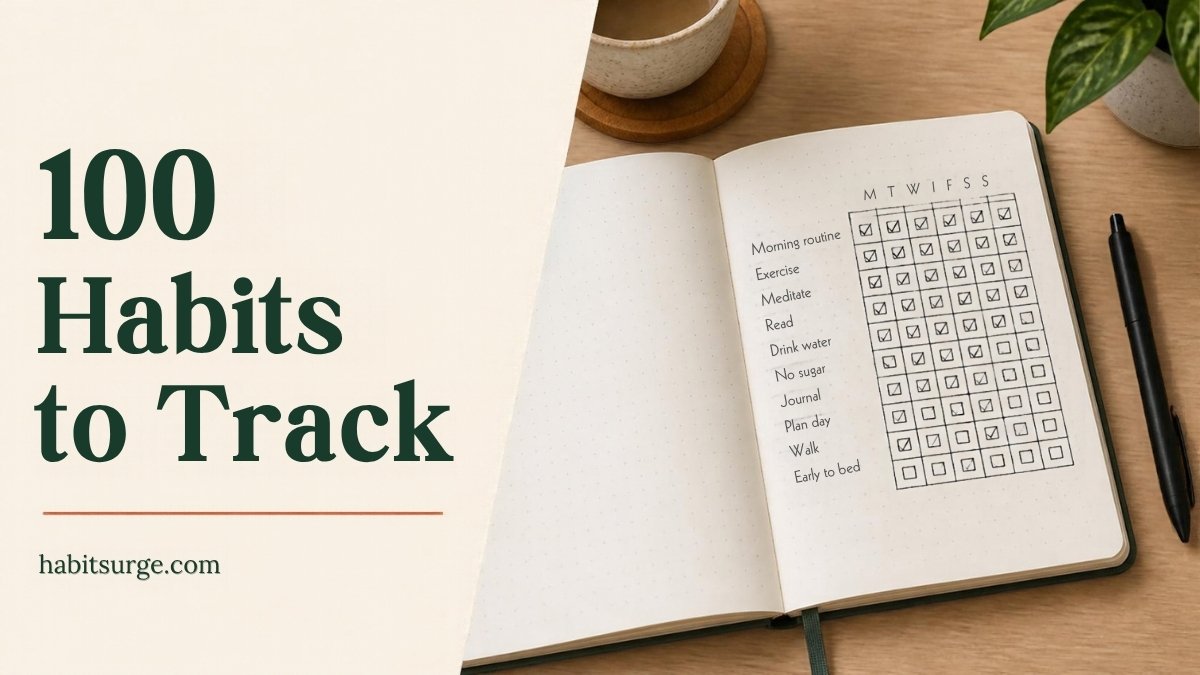
- Paper habit tracker: a grid with days across the top and habits down the side. One checkmark per day.
- Bullet journal tracker: a monthly page with 3 to 8 habits. Great if you already journal. Add a small weekly row underneath for your weekly habits.
- Habit tracker app: fast, with reminders. Pick one with a simple yes/no check.
- Wall calendar: one habit, one big X per day. Simple and very visible.
Keep it visible. Keep it fast. If logging takes more than 10 seconds, simplify.
How to Keep Using Your Habit Tracker
- Track at the same time every day, like right after dinner.
- Never miss twice. One blank day is normal. Two is a pattern.
- Review weekly: which habits are easy now, and which keep failing?
- Drop or shrink habits that keep failing instead of feeling guilty.
For the full system, read how to build habits that stick. If you link new habits to ones you already do, habit stacking makes them much easier to remember.
Want a done-for-you starting plan? Get the free 7-Day Discipline Reset. Get the free guide here.
Frequently Asked Questions
How many habits should I track at once?
Start with 3 to 5. Tracking too many at once makes logging feel like a chore and increases the chance you quit. Add one more only when the first few feel easy.
What are good habits to track daily?
Good daily habits to track include drinking water, moving your body, sleeping 7 or more hours, reading, journaling, planning tomorrow, and limiting phone time. Pick ones that match your current goal.
What are good weekly habits to track?
Good weekly habits to track include exercising 3 times, meal planning, a Sunday review of your week, one rest day, paying or scheduling bills, and calling family or friends. Track them as one checkbox per week instead of every day.
What habits should I track monthly?
Track check-ins that keep the big picture on track: your savings progress, next month’s budget, your goals, one book read, one room deep-cleaned and any health check-ups that are due. Do them together on a fixed day, like the 1st of the month.
Should I track bad habits too?
Yes, but frame them as wins. Track “no social media before noon” or “no snacks after 8 PM” so each checkmark is a success, not a failure.
Is a habit tracker app better than paper?
Neither is better for everyone. Apps give reminders. Paper is more visible and satisfying for many people. Use the one you will actually open every day.
How long should I track a habit?
Track a new habit until it feels automatic, often around two months. Research from UCL found a median of 66 days, with a range of 18 to 254 days.
References
- Harkin, B., Webb, T. L., Chang, B. P. I., et al. (2016). Does monitoring goal progress promote goal attainment? A meta-analysis of the experimental evidence. Psychological Bulletin, 142(2), 198–229.
- Lally, P., van Jaarsveld, C. H. M., Potts, H. W. W., & Wardle, J. (2010). How are habits formed: Modelling habit formation in the real world. European Journal of Social Psychology, 40(6), 998–1009.